

Exclusive Leads vs. Shared Leads: What You're Actually Buying
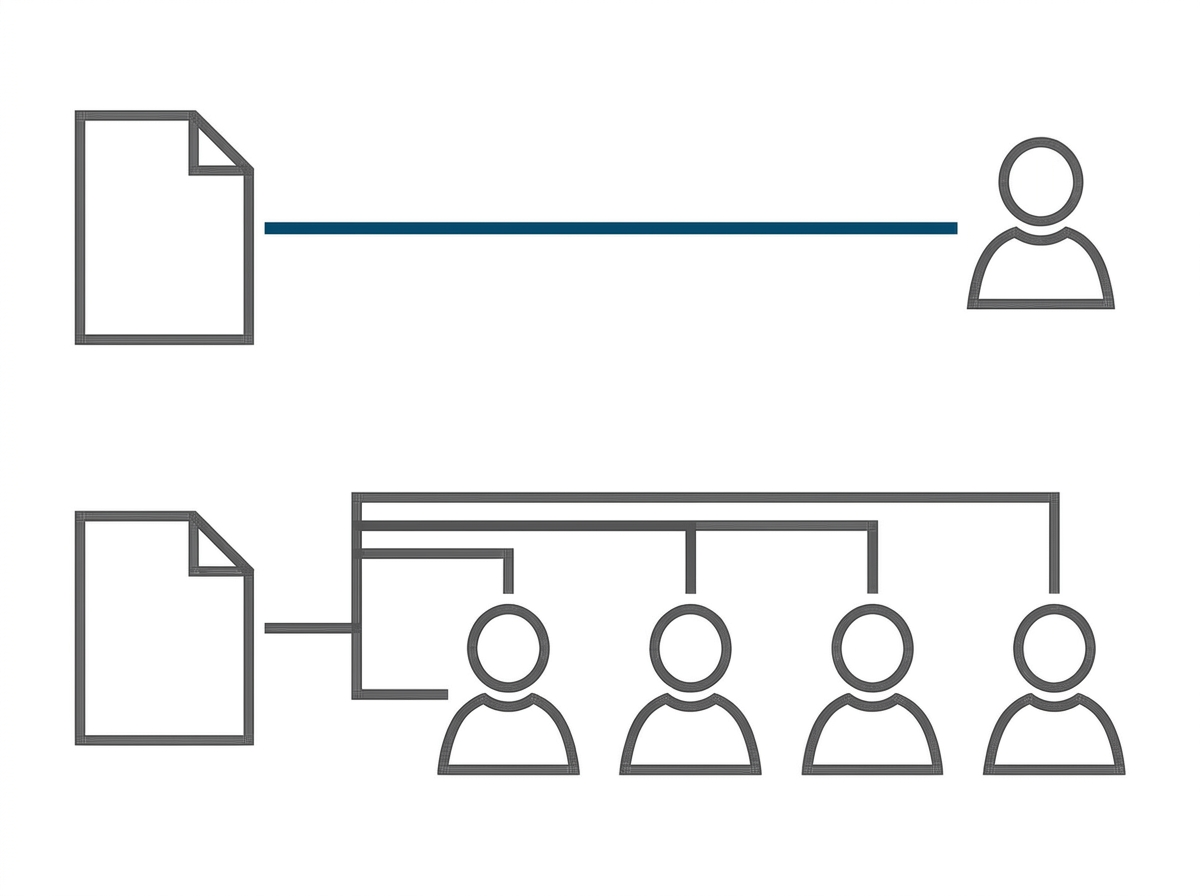
In the lead-resale industry, an exclusive lead is a contact record sold to one contractor. A shared lead is that same record sold to two to five contractors at once, who then race each other to be the first to reach the same homeowner. Both are the same business model at heart: a broker collects a homeowner's information and sells access to it. Owning your own ad account and generating leads that belong to you and no one else is a different thing entirely, and it is the option this whole framing tends to leave out.
If you have ever wondered whether you are bidding against four other guys for the same homeowner, and you bought a shared lead, the answer is yes, that is exactly the arrangement. And "exclusive" is not automatically the escape hatch it sounds like: it only means the broker promised not to resell that particular record more than once. It says nothing about whether the same homeowner filled out three other forms on three other sites before or after yours, or whether the contact information attached to the record is even current.
This piece breaks down what each label actually buys you, what a shared lead does to your close rate, the third option the whole exclusive versus shared debate tends to ignore, with a real contractor who took it, and why AMC's own one client per service area rule is a different animal from buying "exclusivity" from a broker.
What 'exclusive' and 'shared' actually mean
A lead marketplace collects a homeowner's contact details through an online form, often running into the same kind of prefill and staleness problems covered in our piece on Facebook leads, and then sells that record to contractors. "Shared" means the record goes out to a handful of contractors at once, typically two to five, an arrangement standard across the lead-resale industry. "Exclusive" means the marketplace commits to selling that particular record only once, and charges a premium for the promise.
Here is the honest part nobody selling either product tends to say out loud: "exclusive" describes the broker's resale policy on that one record. It does not describe the quality of the lead, and it does not mean the homeowner is exclusive to you. They may have filled out several similar forms across several different sites before yours ever reached them. Exclusive and shared are both terms about how a record is resold, not promises about what is on the other end of the phone.
Exclusive records generally cost more than shared ones on the open market, for the obvious reason: the broker is giving up the ability to sell that same contact several times over. Marketplace resellers commonly price shared leads well below what an exclusive record commands, sometimes in the eighteen to forty five dollar range per shared lead, though the exact numbers vary by trade and region. Whether either price is a good deal is a separate question, one we get into in a companion piece on what leads actually cost.
What shared leads do to your close rate
When the same homeowner's information lands in four or five inboxes at once, you are in a speed and price race before you have said a single word to them. Whoever calls first typically gets the real conversation. Whoever calls third or fourth is often explaining to an already irritated homeowner why they are the third or fourth contractor to call about the same project within the hour, and the conversation starts on the back foot before it starts at all.
For high-ticket outdoor-living work, that dynamic pushes exactly the wrong behavior. A homeowner fielding five nearly identical calls starts comparing price before any single contractor has had the chance to actually walk them through the project, the materials, or the timeline. You end up competing on price for a job the homeowner has not even scoped yet, which is a bad position to negotiate a sunroom, a pool, or a full outdoor-living build from.
The compounding effect is what makes shared leads expensive in a way the sticker price does not show. Your sales time gets split across records where you have roughly a one in five shot at even being the contractor who gets the appointment, while the homeowner on the other end is fielding the same pitch from four competitors in the same hour. A record that looks cheap per lead can end up very expensive per job actually won.
The third option: own the campaign, own the leads
There is an option the entire exclusive versus shared debate is built to leave off the table: not buying a record from a broker at all. Instead, a marketing firm builds and runs ad campaigns inside an ad account that you, the contractor, own. Every lead those campaigns generate belongs to you, because it was never for sale to begin with. With a bought lead, exclusive or shared, you are one of the broker's customers and the lead existed before you did. With your own campaigns, the lead exists because of your ad account, your landing page, and your budget, and there is nobody to share it with.
This is the move Deluxe Pool Services LLC made. Before working with us, Deluxe was buying shared leads from marketplaces like Angi and HomeAdvisor, the same homeowner sold to five or more contractors, a bidding war before the first real conversation ever happened. We built and now run Meta campaigns inside Deluxe's own ad account instead. In its first four months with us, from February through May 2026, Deluxe closed two pool-renovation jobs, both with paid deposits, from its first ten leads generated by those campaigns, with more booked through the spring. Every one of those leads was exclusively Deluxe's, not because a broker promised not to resell it, but because it was generated by Deluxe's own ad and never belonged to anyone else.
Results like Deluxe's vary and depend on a range of factors specific to that engagement. This is one client's documented result, not a promise of what a new client will see. We built the campaigns Deluxe owns. We did not sell Deluxe a list of leads.
This is also, plainly, why we are telling you all of this. We are a marketing firm, not a lead broker, and we do not sell leads to anyone, exclusive or shared. When we talk about exclusivity at all, we mean something different from a resale policy on one record, which is exactly what the next section is about.
Why 'one client per service area' is not the same as buying exclusivity
A marketplace's version of "exclusive" is a resale policy on a single record. AMC's one client per service area rule is a different kind of promise: we commit not to run a competing campaign for another contractor in the same service area. You are not paying a premium for a lead label. You are working with a firm that will not build the identical machine for the business two towns over.
To be direct about it: this is not AMC selling "exclusive leads." That is a phrase we do not use and a product we do not offer. It is a territory commitment about which contractors we will represent in a given market, which is a promise about us, not a resale policy on a record. The full case for how that works lives on our why-us page.
If you are weighing exclusive against shared, you are choosing between two versions of renting someone else's leads. The more durable move, the one Deluxe made when it walked away from shared marketplace leads, is owning the campaigns instead, so the leads were never for sale to begin with.
See how AMC's Meta campaigns work- An exclusive lead is a record sold to one contractor. A shared lead is the same record sold to two to five contractors at once, who then race each other for the same homeowner.
- Both exclusive and shared are the lead-resale model. 'Exclusive' describes the broker's resale policy on a record, not the quality of the lead or the homeowner's loyalty to you.
- Shared leads force a price and speed race that is especially costly on high-ticket outdoor-living work, where a homeowner fielding several nearly identical calls starts comparing price before any real conversation happens.
- The third option is to own your ad campaigns so the leads are yours from the start and were never for sale. Deluxe Pool Services left shared Angi and HomeAdvisor leads for its own AMC-built Meta campaigns and closed two pool-renovation jobs from its first ten own-campaign leads, both with paid deposits, in its first four months.
- AMC's one client per service area is a territory commitment about which contractors we represent in a market, not an 'exclusive lead' product sold on a per-record basis.
If you're tired of renting leads, let's talk about owning your campaigns.
Related articles
Further readingWhy Your Facebook Leads Don't Answer the Phone
Even an exclusive lead is worthless if the phone number attached to it is dead on arrival. Here's the mechanism behind that specific failure.
Read nextWhat Contractors Actually Pay for Leads
Exclusive and shared leads carry very different price tags. Here's what a lead should actually cost, with the real numbers behind it.
Read nextWhy Us
See the full case for AMC's one client per service area commitment, and how it differs from a broker's exclusive record.
Read next