
Websites for contractors, engineered to get found and turn visitors into leads
We build contractor websites that Google and AI models can read cleanly, and that turn the visitors they earn into leads.
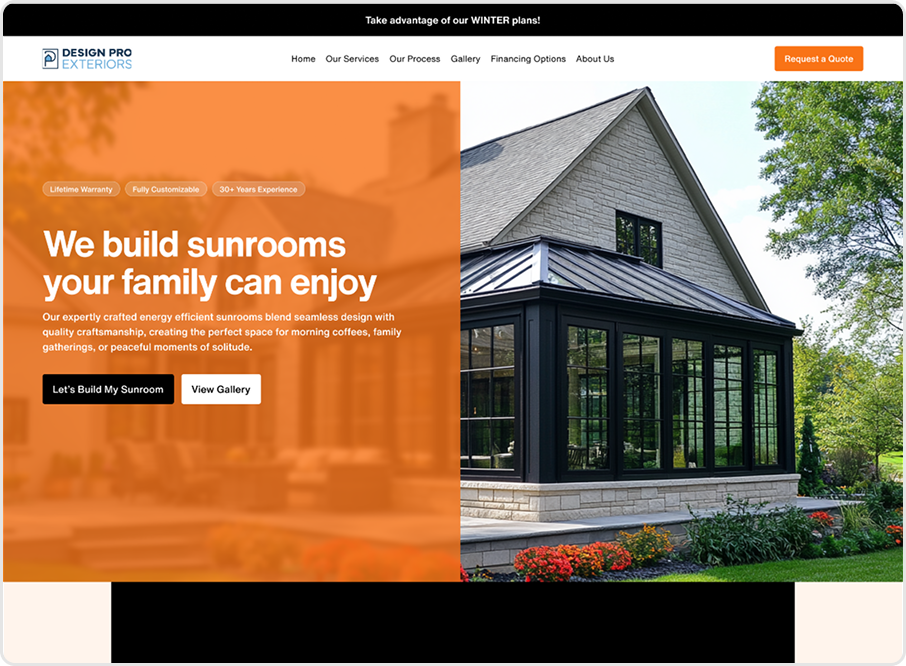
A website that looks good and a website that produces work are two different products
A good-looking website is a brochure. It sits there, static, hoping a visitor calls. A website that produces work is a different kind of thing: it is custom coded from scratch so its structure reads cleanly for Google's algorithm and for AI language models, it is built to convert visitors into leads, and it is engineered from the ground up to be found. A high and growing share of homeowners now act on what an AI recommends, so a site has to be legible to machines, not just pretty to people.
We had this exact problem with our own site. It looked fine and did nothing, so we rebuilt it from scratch, structure first. That is the site you are reading right now.

How we build: structure first
Every site we build starts with the same question: can Google and an AI model actually read this?
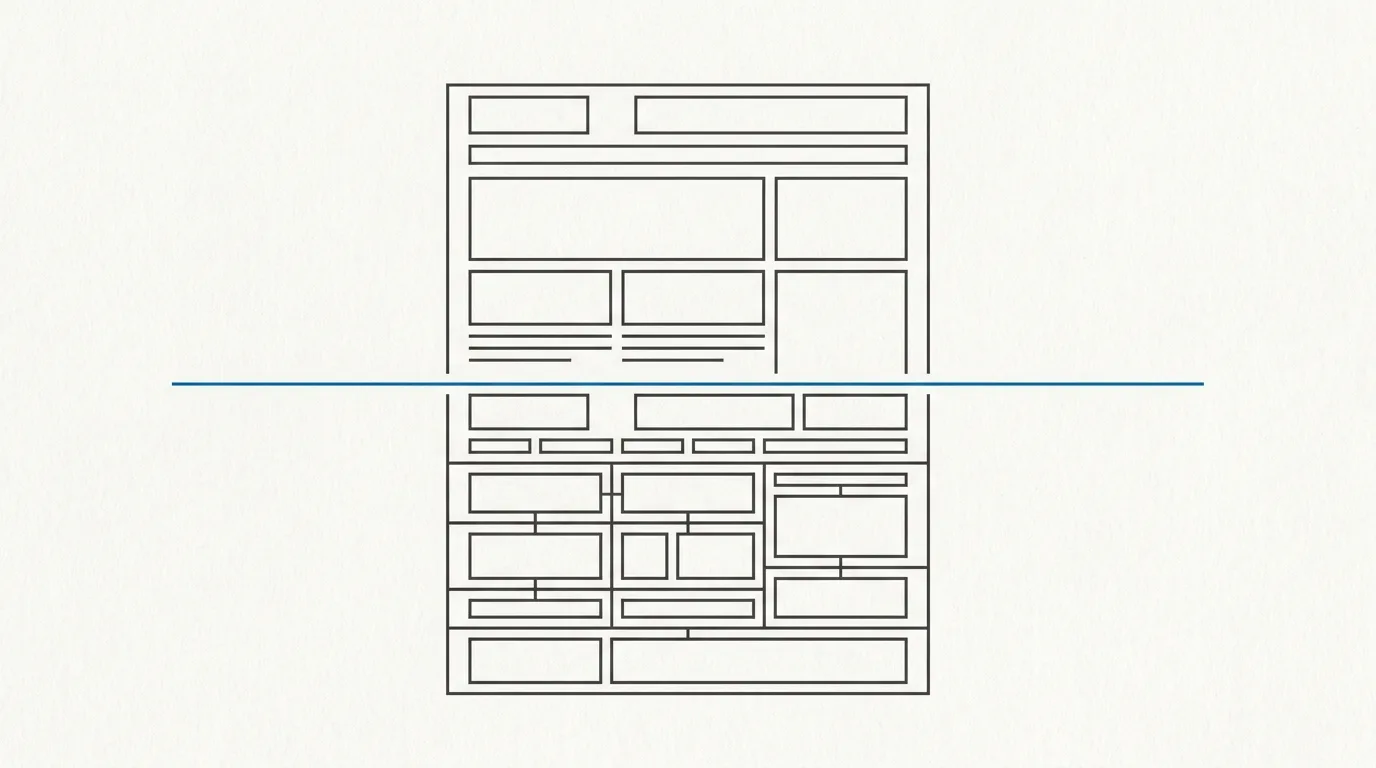
Custom coded from scratch, not a template
We don't start from a theme. Every page is coded by hand with clean, deliberate structure: semantic markup, fast load times, and schema that Google's algorithm can read without fighting the code around it. A template site carries generic structure and extra weight it does not need. Ours does not.
Structured to be read by AI language models
A growing share of homeowners now start with an AI, and answer engines pull their recommendations from sites whose structure they can actually parse, so we build that legibility into the code itself. In practice that means clean semantic HTML with real landmarks and a logical heading order, JSON-LD schema that spells out your business, your services, and your reviews as structured data a model reads without guessing, an llms.txt summary at the site root written for AI crawlers, and consistent, unambiguous naming of who you are and what you do on every page. A model reading your site should never have to infer the basics. The ongoing content and authority work that keeps a site being cited over time, blog posts and backlinks, is a separate, continuing service: see our SEO and AI Visibility work below.
Built on the plain-language terms homeowners actually search
We write and structure the site around how homeowners actually describe the work: sunroom, paver patio, screened porch, inground pool, so the pages match real searches instead of trade jargon.
Forms and lead capture that don't drop leads
A site is only as good as what happens after someone fills out the form. We build lead capture that sends a real lead to a real inbox reliably, so a submission never quietly disappears.
Why we never send your ad traffic to your homepage
A homeowner taps your ad about a paver patio and lands on your homepage. Now they are looking at a hero slider, five services, and a navigation menu with nine places to go. The one thing they clicked for is in there somewhere, but they have to go find it, and most of them will not. They close the tab, and your ad budget paid for the visit.
A dedicated landing page removes the hunt. It is built for one ad and one offer, so the page opens with the exact thing the click promised, backs it with proof for that job type, and gives one clear next step instead of a menu. Nothing else competes for attention, because nothing else is on the page.
The difference shows up in numbers we watch every week. From our landing pages, 1 in 3 leads makes it to the quote stage of the sales pipeline, and Probuilt Pool & Patio's split-tested landing pages convert at 6% or better. Those are specific engagements, not a promise for every campaign, but they are the reason the click never goes to the homepage when we run ads.
Ads pointed at your homepage
- The page speaks to everyone, so it opens with everything: services, history, awards.
- The visitor has to hunt for the thing the ad promised them.
- Navigation offers a dozen exits before the form ever appears.
- One generic contact form asks every visitor the same questions.
Ads pointed at a dedicated landing page
- The page opens with the exact offer the ad made.
- Proof and context for that one job type, nothing else.
- One clear next step instead of a menu to sort through.
- The form qualifies the lead for that specific project before it reaches you.
The outdoor living contractors we build marketing for




“And if you've seen most paver websites, you know a lot of them feel outdated or pieced together. Ours finally reflects the quality of work we do. But beyond just making it look good, Noah really helped us understand why layout, content, and structure matter, and how they impact how you show up on Google and your overall rankings.”
Welton Lima
TGS Pools & Pavers, Google review
“Noah was outstanding, his expertise in website design and SEO made the entire process seamless. As a business owner, I care about every detail of my website, and so did Noah. He truly understood my vision and went above and beyond to make sure everything was perfect.”
Brandon Giebel
white-label partner, Google review
Common questions about contractor websites
Why doesn't my website get me any leads?
What makes a contractor website actually rank on Google?
Is a custom-coded website better than a template builder like Wix or WordPress?
Will an AI recommend my website?
Do you handle SEO and upkeep after the site launches?
Related services
Website Maintenance & SEO
The natural next step after a build: the ongoing work that keeps a site ranking and getting cited by AI.
Learn moreWhy Us
The full argument for dedicated landing pages and why we built our own site from scratch.
Learn moreCase Studies
See the real, named results behind the sites and campaigns we build.
Learn moreReady for a website that actually works for you?
Book a free consultation, or if your current site is underperforming, ask for a free audit and we will tell you exactly what it is costing you.
No locked-in contracts. We earn your business every month.
Step 1 of 6